Blockchain pioneer calls for stronger safeguards and independent AI infrastructure in Korea
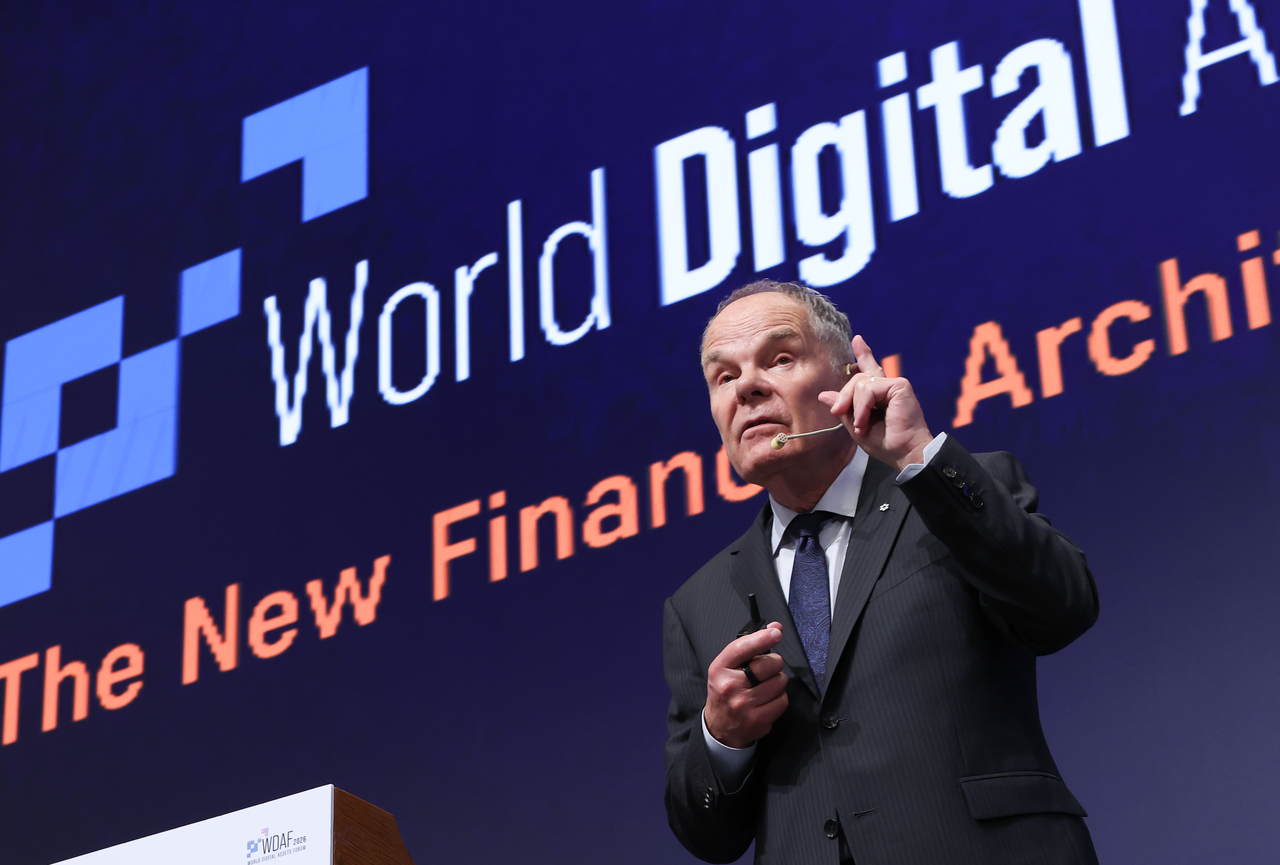
Don Tapscott, executive chairman of the Blockchain Research Institute, predicted Monday that artificial intelligence agents would increasingly manage assets, execute transactions and make financial decisions on behalf of individuals, reshaping the global financial system.
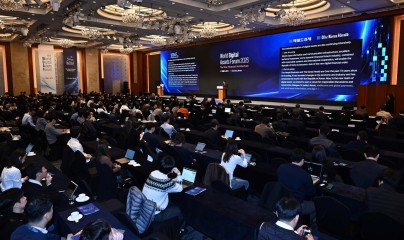
"It's an agentic economy with an agentic financial system," Tapscott said at the World Digital Assets Forum 2026, hosted by The Korea Herald and Herald Business in Seoul.
In a welcome address titled "The Transformation of Assets in the New Technology Order," he argued that the convergence of AI and blockchain would transform how assets are managed and traded, reducing reliance on traditional financial intermediaries.
"We are entering an era in which assets are governed by rules," he said, referring to blockchain-based smart contracts that automatically execute agreements when predetermined conditions are met.
Tapscott described blockchain as an "internet of value," enabling assets to be transferred directly and securely rather than through multiple intermediaries, potentially reducing transaction costs and delays.
He singled out personal AI agents as a major driver of change, predicting they would eventually serve as financial advisers, doctors and lawyers, making increasingly complex decisions on behalf of individuals.
"Your personal agent is your doctor, having graduated from every medical school, your financial planner and your lawyer," he said, predicting that such agents could reach an intelligence quotient of 1,000 within a decade.
His book, "You to the Power of Two: Redefining Human Potential in the Age of Identic AI," co-authored with Joseph F. Bradley, also explores this vision. In it, they examine how personal AI counterparts could expand human capabilities and reshape professional and everyday life.
But allowing AI agents to handle financial transactions would require stronger safeguards, he cautioned.
"Agents cannot act arbitrarily unless they are accountable to humans," Tapscott said, calling for verifiable digital identities, identifiable human owners, revocable transaction authority and know-your-customer requirements.
He also emphasized the need for regulatory oversight, transparency and mechanisms for consumers to seek redress when autonomous transactions go wrong.
Turning to South Korea, Tapscott urged the country to develop its own AI infrastructure rather than depend entirely on systems controlled by a handful of major US technology companies.
"South Korea needs to build its own infrastructure," he said.
Drawing on its industrial strengths, Korea could establish a new economic model combining AI, blockchain, robotics and quantum technology, he added.
ch0221@heraldcorp.com